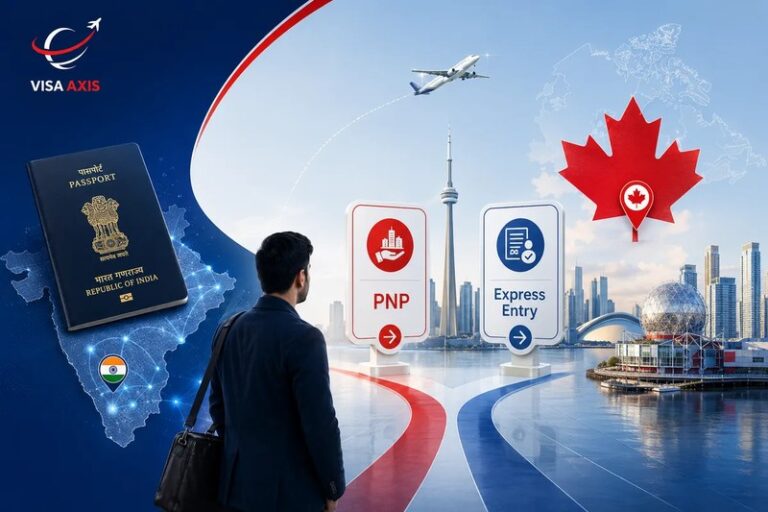
How Temporary Work Visas Can Lead to a Canada Permanent Resident Visa
Canada’s immigration system has an open door of opportunities for every immigrant, especially when you have a temporary work visa and are aiming for a Canada permanent resident visa. For Indian professionals, the process of getting a Canada Permanent Resident Visa via a temporary work visa is simple. It’s not just about a visa, it’s your chance to build a better life in a country that values your skills and dreams with a Canada permanent resident visa.
This guide will help you understand how to use your temporary work visa to get Canadian permanent residency.
Understanding the Canada Permanent Resident Visa
Canada stands tall as one of the most inviting destinations for skilled workers who want to start a new chapter abroad. The Canada permanent resident visa application form is your first step to living, working, and settling in Canada for the long term. Indians are among the top applicants, drawn by Canada’s inclusive society, world-class opportunities, and stable lifestyle.
What is a Canada Permanent Resident Visa?
The Canada permanent resident visa is an official status that grants you the right to live and work anywhere in Canada, attend educational programs, and benefit from most social services. With a Canada permanent resident visa, you can access Canadian healthcare and schools, live securely in Canada, and still keep your Indian citizenship.
Key highlights of holding a Canada PR:
- Legally live and work in any province or territory.
- Sponsor family members for PR.
- Free travel within/without Canada (with PR card).
- Eligibility to be a Canadian citizen by satisfying the requirements of residency.
Your journey begins by understanding that the eligibility criteria, age, education, work experience, and language proficiency play a big part. Indians interested in the Express Entry Canada process can take advantage of points-based selection and faster timelines.
Types of Permanent Resident Programs
Canada offers several PR programs. Choosing the right one depends on your background, work experience, and long-term goals:
1. Express Entry System
Express Entry is the most popular PR pathway for skilled immigrants and includes:
- Federal Skilled Worker
- Federal Skilled Trades
- Canadian Experience Class
Points are awarded for skills, education, work experience, and language ability.
2. Provincial Nominee Programs (PNP)
Each province can nominate individuals for PR based on its economic needs. PNPs are ideal if you have job offers or work experience in a specific province.
3. Family Sponsorship
Canadian citizens and permanent residents can sponsor spouses, partners, dependent children, parents, and grandparents for permanent residency. Sponsors must meet age, residency, and financial requirements and commit to supporting the sponsored person. This program supports family reunification and allows sponsored members to live, work, and study in Canada.
4. Business Immigration
Entrepreneurs, investors, and business owners can qualify for permanent residency by starting or buying a business, making a significant investment, or creating jobs in Canada. Eligibility is based on business experience, net worth, and the ability to contribute to the Canadian economy.
For Indian applicants, the Express Entry pathway remains a favourite, thanks to its streamlined application process and faster Canada PR processing time in 2026.
Also Read: Canada Direct PR from India!
Pathways from Temporary Work Visas to Permanent Residency
Many Indians begin their Canadian adventure with a temporary work visa, which opens doors to permanent residency. Canada values skilled foreign workers and has special programs designed to help temporary workers transition easily.
The Temporary Foreign Worker Program (TFWP)
TFWP allows Canadian businesses to hire overseas talent for jobs they can’t fill locally. If you’re selected:
- You gain Canadian work experience, improving your Express Entry score.
- Many employers assist with PR support, giving your application more weight.
TFWP is a common starting point for Indian professionals, especially in the healthcare, IT, and manufacturing sectors.
International Mobility Program (IMP)
IMP applies to the workers who do not go through the Labour Market Impact Assessment (LMIA), such as intra-company assignments and foreign agreements. The Indians on an IMP visa adore the flexibility since there are categories that directly contribute to PR eligibility.
Canadian Experience Class (CEC)
The Canadian Experience Class is designed to suit individuals who have been employed in Canada for at least one year in a skilled position. It is perfect for Indian professionals who want to establish themselves permanently in Canada.
CEC eligibility includes:
- Minimum one year of Canadian skilled work experience.
- Meeting language proficiency requirements.
- Intent to reside outside Quebec.
Check Your 67-Point Score Now!
Step-by-Step Guide: Transitioning from Work Visa to PR
Getting a Canada permanent resident visa after being on a temporary work visa involves several steps, but the process is simple if you’re prepared.
Step 1: Assess Eligibility
Before starting your application, check your eligibility. Answer a few questions and immediately see your chances for different immigration programs. This helps you understand your options and move forward with confidence.
Step 2: Gather Documents
Use the Canada PR document checklist:
- Passport and ID.
- Employment records.
- Education certificates and ECA.
- Language test results.
- Proof of funds.
- Reference letters.
Step 3: Choose Your Program and Create an Express Entry Profile
The Express Entry system is the fastest route for most Indians. Fill out the Canada permanent resident visa application form online and receive a Comprehensive Ranking System (CRS) score based on your qualifications.
Step 4: Secure a Job Offer (Optional)
A valid job offer adds points to your Express Entry profile. Many candidates skip this, but if you’re switching from a work visa, you likely already have this advantage.
Step 5: Submit Your PR Application
Upload all documents, pay the Canada PR cost in INR, and submit your application via IRCC. Keep your IRCC login safe; it’s your lifeline for application updates. Make sure to double-check all details before submission to avoid delays or rejections.
Step 6: Wait for ITA (Invitation to Apply)
If selected, you’ll get an ITA in your IRCC account for further steps. Once you receive it, submit all the requested documents. Make sure to respond within the given deadline to avoid missing your chance.
Step 7: Biometrics and Medical Exam
Most importantly, attach your biometrics and medical exam results to the documents. These are crucial for the PR application process. Failure to include them may result in delays or rejection of your application.
Step 8: Final Review and PR Status
After submitting, the IRCC reviews your application. Once approved, you’ll receive your PR card in the mail. You can track progress through your account. Keep your contact information updated to ensure smooth communication throughout the process.
Also Read: How Long Does It Take to Get a Canada Visitor Visa
Factors That Influence the Processing Time
Many applicants want a quick answer: How long does it take to get my PR? The reality is, Canada’s permanent resident visa processing time depends on several factors.
Type of PR Program
- The Express Entry Canada process takes around 6 months from start to finish.
- The Provincial Nominee Program may take 12 months.
- Family sponsorship or business immigration can vary.
Completeness of Application
Double-check your documents. Lack of or wrong information might cause delays. The better your Canada PR document checklist is, the quicker your application goes. Always ensure all forms are filled out accurately, and attachments are complete to avoid unnecessary setbacks.
Country of Origin and Security Checks
Indian applicants tend to pass through the process fast; however, an unexpected security check or review of documents can add a couple of weeks or months. Staying responsive to any additional requests from IRCC helps minimise delays during this stage.
Expert Tips to Improve Your Chances
To get the best opportunities to have your PR application successful, consider the following tips as proposed by the experts:
- Make sure that all the documents are not outdated and translate them into English or French.
- Prepare for the language test, extra points can boost your CRS score.
- Include experience letters with detailed job descriptions.
- If you have worked in Canada, request letters from recent employers.
- Consider hiring an immigration consultant to avoid errors.
Common Mistakes to Avoid During Application
Don’t let simple mistakes slow down your Canada PR application. Check everything carefully and avoid common errors.
- Submitting incomplete forms or leaving fields blank.
- Not attaching supporting documents (e.g., proof of funds).
- Missing deadlines for medical or biometrics requests.
- Overlooking the need for certified translations.
- Using outdated personal information.
Staying organised is the secret to a smooth application experience.
Conclusion
A temporary work visa is a great first point for getting a permanent residency status in Canada. Indian applicants can easily get through the process with the right information and by staying updated with documents and timelines.
Start your Canada journey with VisaAxis, get expert support, and unlock a future full of opportunities and stability.
FAQs
How long does it take to get a Canada permanent resident visa after work experience?
The average processing time of a permanent resident visa for Canada is between 6 to 12 months, according to the immigration route taken. Express Entry is the quickest, and it typically takes approximately 6 months. The provincial requirements and additional steps that are part of provincial nominee programs can take up to a year.
Can I apply for a PR visa while holding a temporary work permit?
Yes, you can still apply to gain permanent residency in Canada on a genuine temporary work permit. Skilled workers who have been employed in Canada already are the target of such programs as the Canadian Experience Class and Express Entry. You do not have to go out of the country to begin your PR application.
What are the eligibility criteria for permanent residency through the Canadian Experience Class?
To qualify for the Canadian Experience Class, a person is required to have one year of skilled work experience in Canada. You will also have to meet the demands of language, and you will not be living in Quebec. This is the most acceptable action that can be undertaken by temporary workers to get permanent residence in Canada.
Do I need to leave Canada while applying for permanent residence?
No, you can stay in Canada as long as you are going through the PR application, but your temporary status must not have expired. All these, like the completion of forms and even the attachment of documents, are carried out online through the portal of IRCC.
How can I check my PR application status online?
Check your PR application status by logging into your IRCC account with your GCKey. The portal enables real-time information on the eligibility, biometrics, and final decisions. You should also be in the habit of checking your account to determine the status of your application.