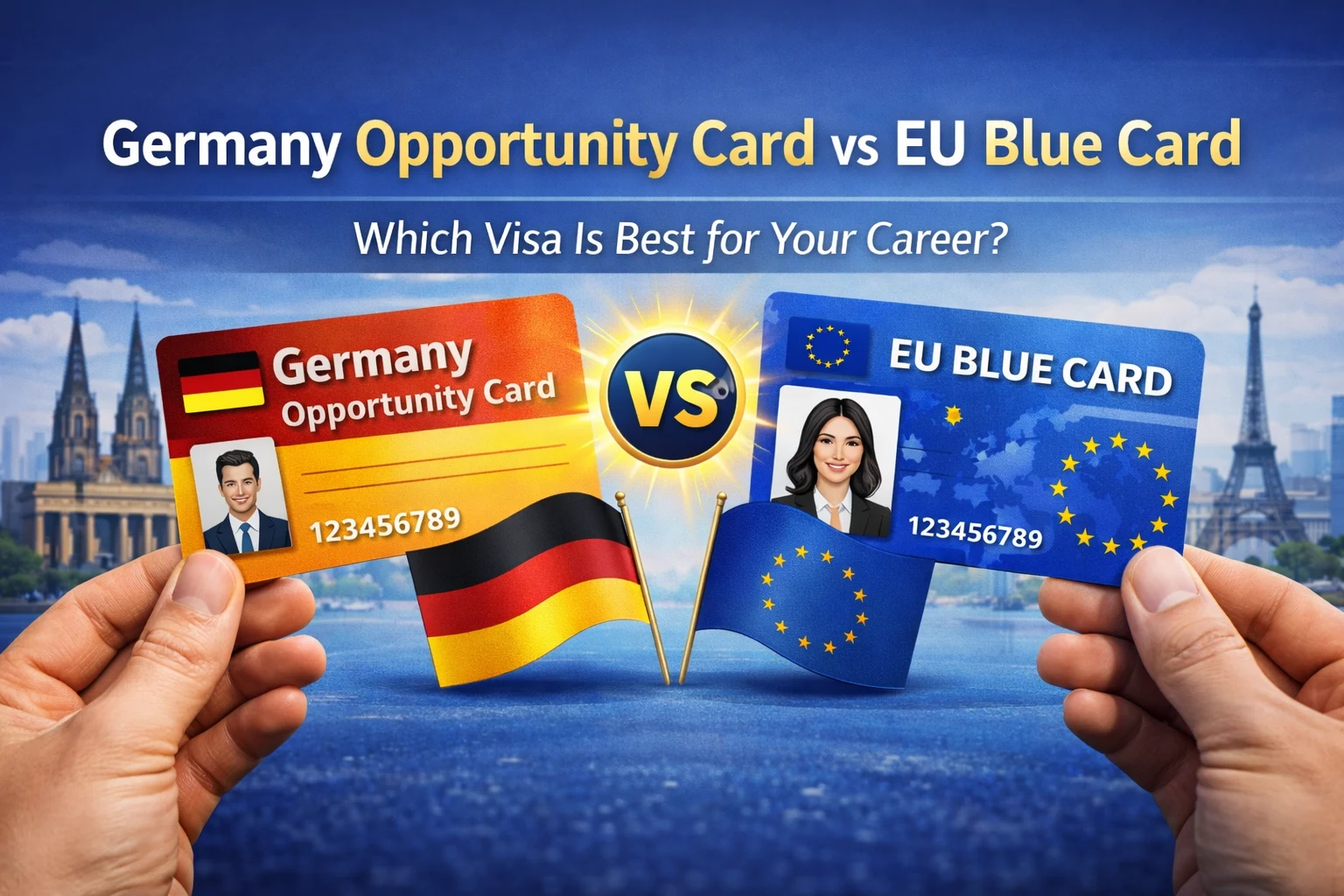
Germany Opportunity Card vs EU Blue Card: Which Visa Is Best for Your Career?
If you are planning to work in Germany in 2026, choosing the right visa is one of the most important decisions you will make. Many skilled professionals, especially from India, feel confused between the Germany Opportunity Card vs EU Blue Card. Both visas allow you to live and work in Germany, but they are designed for very different situations.
This guide explains the differences between the Germany Opportunity Card vs the EU Blue Card. You will learn how each visa works, who should apply, salary rules, PR timelines, and which EU visa is better for Indians.
Germany Career Visa Options in 2026
Germany is facing a serious shortage of skilled workers in IT, engineering, healthcare, construction, and technical fields. Because of this, the government has expanded Germany career visa options for 2026 to attract global talent. Two visas stand out:
- Opportunity Card (Chancenkarte): For job seekers.
- EU Blue Card: For professionals with high-paying job offers.
Choose a visa that matches your career stage and goals to minimise the chances of rejection, save time. Let’s understand both of these visas in detail.
What Is the Germany Opportunity Card (Chancenkarte)?
The Germany Opportunity Card is a points-based visa that allows skilled professionals to enter Germany without a job offer and search for work from inside the country. This visa is especially useful for Indians who want to explore the German job market directly.
Key Features (Germany Opportunity Card vs EU Blue Card)
Here are some core features that make the Opportunity Card unique and attractive for job seekers.
- No job offer required.
- Points-based eligibility.
- Valid for up to 12 months.
- Part-time work allowed (20 hours/week).
- Can be converted to a work visa after finding a job.
This visa option offers more flexibility but slower settlement.
Eligibility Criteria
To qualify for the Germany Opportunity Card, applicants must meet basic requirements that show they can support themselves in Germany while looking for work. The focus is on skills and employability rather than income.
- Have a recognized degree or vocational qualification.
- Show basic German or English language skills.
- Provide financial support for your stay.
- Score enough points.
Meeting these eligibility criteria ensures you are well-prepared to live and work in Germany while maximising your chances of successfully obtaining the Opportunity Card.
Points System Explained (Opportunity Card Germany Benefits)
The Opportunity Card uses a clear points system to evaluate your overall suitability, ensuring that candidates with the right mix of skills, experience, and adaptability have a better chance of approval.
- Education level
- Work experience
- Language skills
- Age
- Previous stay in Germany
These Opportunity Card Germany benefits make it suitable for mid-level professionals and fresh graduates.
What Is the EU Blue Card in Germany?
The EU Blue Card is a work-and-residence permit for highly qualified professionals who already have a German job offer with a good salary. It is one of the most powerful Germany career visa options 2026 for long-term settlement.
Salary Threshold (2026 Update)
To meet the EU Blue Card eligibility, you must earn:
- Around €50,300 per year (general roles).
- Around €45,300 per year (shortage occupations like IT, engineering, healthcare).
Qualification Requirements
In addition to meeting the salary and job offer requirements, the EU Blue Card also emphasises that applicants must have the right qualifications to ensure they can successfully perform their role in Germany’s skilled workforce.
- Hold a recognized university degree.
- Work in a skilled profession.
- Match your job role with your education.
Job Offer Requirement
To apply for an EU Blue card, a valid job offer is mandatory. This is the biggest difference in Germany Opportunity Card vs EU Blue Card.
Core Difference: Job Offer vs No Job Offer
The simplest way to understand the Germany Opportunity Card vs the EU Blue Card:
- Opportunity Card: Job offer NOT REQUIRED
- EU Blue Card: Job offer REQUIRED
Your current job situation decides which visa is right.
Side-by-Side Comparison Table (Opportunity Card vs EU Blue Card)
To clearly understand the practical differences between Germany Opportunity Card vs EU Blue Card, a side-by-side comparison makes it easier to see which visa aligns with your career goals and current situation.
| Factor | Opportunity Card | EU Blue Card |
| Job Offer | Not required | Mandatory |
| Eligibility | Points-based | Salary + degree |
| Salary Rule | None | €45k–€50k |
| Work Rights | Part-time only | Full-time |
| Validity | 12 months | Up to 4 years |
| PR Speed | Slower | Faster |
| Best For | Job seekers | High earners |
Opportunity Card Germany Benefits
The Opportunity Card is designed to give skilled professionals greater freedom and confidence when entering the German job market. It allows applicants to focus on finding the right role rather than rushing into any available offer. Key Opportunity Card Germany benefits include:
- Enter Germany without job pressure.
- Attend interviews in person.
- Understand German work culture.
- Earn part-time income.
- Flexibility to change employers.
EU Blue Card Advantages
Major advantages linked to EU Blue Card eligibility in Germany:
- Immediate full-time work.
- Faster permanent residency.
- Family members can work freely.
- Easier long-term settlement.
- Strong job security.
For professionals with solid job offers in hand, the advantages clearly favor the Blue Card.
Permanent Residency Path Comparison
When long-term settlement is your goal, understanding how quickly each visa leads to permanent residency becomes a key decision factor.
| Visa | PR Timeline |
| EU Blue Card | 21–33 months |
| Opportunity Card | After job + work visa |
In Germany Opportunity Card vs EU Blue Card, PR is much faster with the Blue Card.
Processing Time Comparison (2026)
Processing time is another important factor to consider when comparing the Germany Opportunity Card vs the EU Blue Card, especially if you are planning a timely move to Germany.
| Visa | Processing Time |
| Opportunity Card | 3–5 months |
| EU Blue Card | 2–4 months |
Both options offer relatively fast processing compared to many other European work visas.
Common Mistakes When Choosing Between the Two
Many applicants make avoidable mistakes when deciding between the Germany Opportunity Card vs EU Blue Card, often leading to delays, rejections, or unrealistic expectations.
- Choosing the EU Blue Card without salary eligibility.
- Ignoring degree recognition.
- Underestimating living costs on the Opportunity Card.
- Expecting a fast PR without a job offer.
Avoiding these errors improves success in Germany Opportunity Card vs EU Blue Card decisions.
Future Outlook: Germany Immigration Trends 2026
Looking ahead, Germany’s immigration strategy is evolving to attract more global talent and make the visa process simpler and faster. Germany plans to:
- Expand points-based visas.
- Simplify recognition rules.
- Increase digital processing.
Together, these reforms significantly strengthen Germany career visa options 2026, making it easier for job seekers and professionals to plan long-term careers and settlement in Germany with greater confidence.
How VisaAxis Can Help You Choose the Right German Visa
Choosing between the Germany Opportunity Card vs EU Blue Card can be confusing. As professional help can get you through the right option without any hassle. At VisaAxis, our immigration expert team helps candidates by:
- Checking eligibility.
- Calculating Opportunity Card points.
- Reviewing EU Blue Card eligibility Germany.
- Creating a PR-focused visa strategy.
With expert guidance at every step, you gain clarity, avoid costly mistakes, and move forward with confidence toward your Germany career plans.
Conclusion
The choice between the Germany Opportunity Card vs EU Blue Card depends on your career goal and your current career stage. For flexibility and job search freedom, go with the Opportunity Card. For stability and faster PR, the EU Blue Card is better.
Contact the experts at VisaAxis for personalised guidance to start your career in Germany smoothly.
FAQs
What is the difference between Germany Opportunity Card vs EU Blue Card?
The Opportunity Card lets talented folks enter Germany to hunt for work freely—no job lined up needed, perfect if you’re testing the waters. EU Blue Card demands a solid job offer right away, aimed at pros ready to jump into skilled roles without delay.
What are the EU Blue Card eligibility requirements in Germany?
You’ll need a legit degree recognized over there, plus a job paying at least €45,300 yearly for in-demand fields or €50,300 otherwise, along with health coverage and no red flags in your background.
What are the Opportunity Card Germany benefits?
It hands you a full year to network and land gigs, lets you pick up part-time shifts up to 20 hours a week to get by, and sets you on a points-driven track straight to work permits and eventual permanent residency.
Which EU visa is better for Indians in 2026?
Really comes down to where you stand—grab the Blue Card if you’ve got a high-paying offer waiting; go Opportunity Card if you’re skilled but still shopping for the right fit in Europe.
Can I switch from Opportunity Card to EU Blue Card?
Absolutely, once you snag a job that hits the Blue Card’s pay and skills bar, you can switch right there in Germany without starting over.
Which visa leads to permanent residency faster?
EU Blue Card gets you to permanent residency quicker—often 21 to 33 months if you’ve got decent German (B1 level), or 48 months tops, beating out the Opportunity Card’s slower ramp-up.
Do I need a job offer for the Opportunity Card?
Nope, that’s the beauty of it no employer commitment required; you qualify purely on your points from experience, skills, age, and some language know-how to get in the door.